
Anthony Perez literally began his life in prison. His mother gave birth to him while she was incarcerated. From there it was a long and difficult road to where he is today, a successful substance use disorder counselor in northern California.
But that’s getting ahead of the story. Growing up, Perez was shuttled around between foster care, his grandparents, his mom when she was out of prison and group homes.
Perez was in and out of juvenile detention. At one point while he was locked up for a car that he and some other guys stole, his brother was shot and killed. He was devastated and turned to the gangs for support.
“Gang members embraced me. I saw love. Love and attention,” he says. “My brother had been like a father figure. He was 11 years older than me.”
Joining a gang and seeking revenge
After his brother’s death, Perez wanted revenge. “I became a gang member, and I was all in. I was getting manipulated to believing all this stuff, and I felt love. But they put me to work. That’s part of that lifestyle. And I got arrested again,” he says.
He went to prison at 19 and got out when he was 21, when he began to, as he says, “run amok.” After six months he was locked up again for a robbery. He later picked up a life sentence for assault with a deadly weapon charge, under California’s Three Strikes Law. In total, he served 25 years and was incarcerated in six different facilities.
His 18-year-old son was shot nine times while he was in prison, and that’s when Perez decided he had to turn his life around.
“OK, I’m done,” he said to himself. “I wanted to get out.”
OMCP Program set him on career path
Perez left his gang and began going to self-help groups and worked to improve himself. He also applied, and was accepted, to the Occupational Mentor Certification Program (OMCP) at California State Prison, Los Angeles County, where he was incarcerated at the time.
“I told myself I need to learn how to be a mentor,” he says. “I got in not knowing that what I was getting into would be drug and alcohol counseling.”
The program, located at seven California state prisons, is geared toward those with at least three years left on their sentences. It trains people to become alcohol and other drug (AOD) counselors and consists of one year of classes in subjects that include pharmacology, ethics and counseling, as well as internship hours. After graduating from the program, participants are paid to be peer-to-peer counselors to other individuals who are incarcerated. They can then get AOD certification, so they will be ready for a new career upon release.
As he wrote in a letter this summer to update people on his accomplishments, “I was proud to be part of the first Level Four group, known as Storming. The men in our group came from many different backgrounds, beliefs, personalities and life experiences. Despite our differences, we shared a common goal: To better ourselves, address the issues that led to our incarceration and prepare for successful lives after release.”
“Looking back, I can honestly say that OMCP helped lay the foundation for the career and life I have today. It was one of the first opportunities that showed me a future beyond incarceration.”
Perez says he did more than 3,000 hours, including supervised work experience. He was certified by CAADE, the California Association of Alcohol/Drug Educators.
Applied to college the day he was released
On the day Perez was released from prison, he headed for Berkeley City College to enroll and enter the Rising Scholars Program.
Since his release from prison, Perez has earned certifications in drug and alcohol counseling and life coaching, and continues his education toward an AA degree.
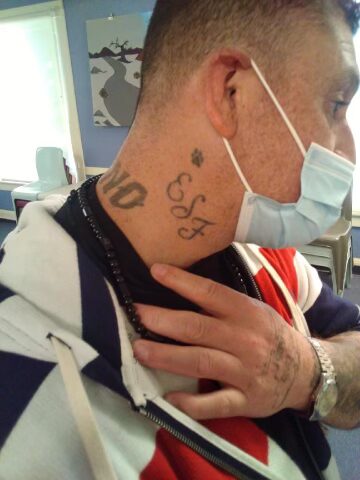
He also began the process of removing his extensive tattoos, beginning a journey of transformation.
“I knew that the tattoos were going to be an issue,” he says. “I knew they would cause me problems getting jobs. And I didn’t want to be in front of people with tattoos showing. They might be trying to get their life together but are still struggling and not hanging out with their gang members. If they look at me as one of their enemies, they would not be able to get treatment from me.”
Tattoo removal became integral reentry component
He saw a Jails to Jobs packet while he was in prison and noticed the part about tattoo removal. So he wrote to Mark Drevno, our executive director.
In his most recent update, he explains: “While I was still incarcerated, I spent much time contemplating what my future might look like if I ever got another chance at freedom. I worried about getting a job, housing, relationships and whether people would see me as more than my mistakes. I also worried about the visible tattoos on my neck and hands that symbolized a life I no longer wanted to be associated with.”
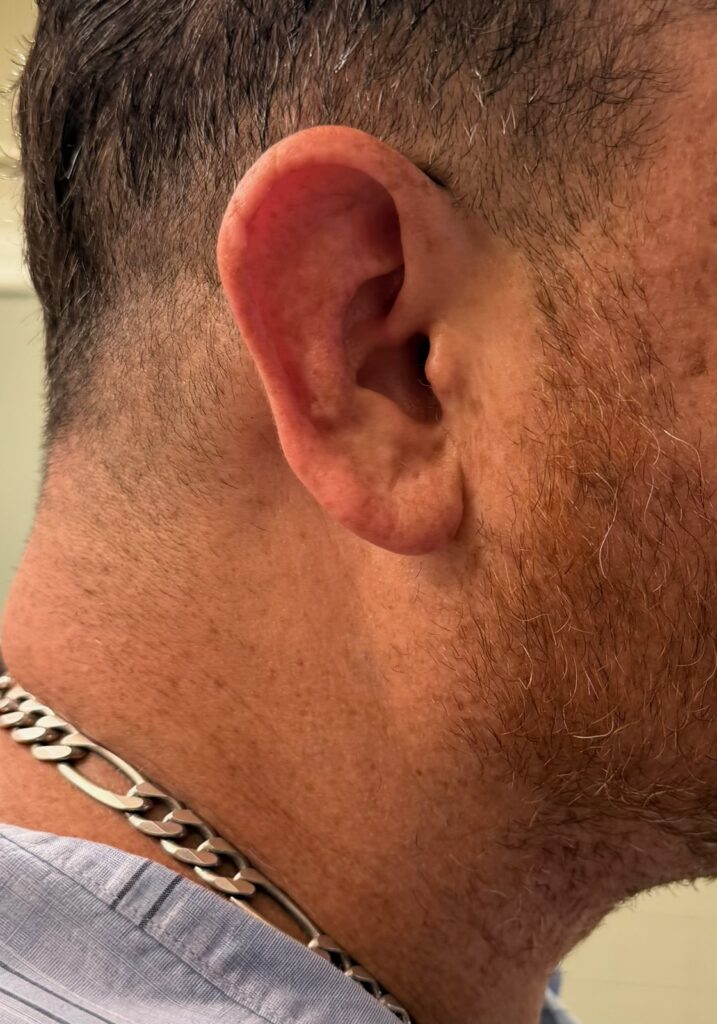
“What started as a way to remove visible barriers became something much deeper. Removing the tattoos from my neck and hands boosted my confidence and reduced many assumptions people made about me. Over time, I realized I wanted to keep going. Many of my remaining tattoos no longer represent who I am today. They are reminders of painful memories, wrong choices, survival tricks and a lifestyle I left behind years ago.”
Tattoos no longer define him
“Now, at 51, I am not the same man I was in my twenties, thirties or forties. The tattoos symbolize chapters of my life that no longer define me. I want the freedom to be seen for who I am now, not who I once was. Tattoo removal has become more than a cosmetic change. It’s a visible sign of personal growth. Every session reminds me that transformation is possible.”
Drevno answered his original letter, saying he would personally take him to his first appointment.
“I got out, and he did take me to my first one. And I’m now clear of all my neck and my hands. It took about three years of every-other-month treatments,” he says.
He now works as a certified substance use disorder counselor at the Antioch, Calif., office of BAART Programs, a nationwide group of opium addiction treatment centers.
Perez has a caseload of clients who he sees on a regular basis, does crisis intervention and intake and works with them to create a treatment plan. On Fridays he runs groups with varied curriculum that include drug and alcohol education and relapse prevention. He also refers clients to other services, such as tattoo removal, health care and transportation – and housing and resources for food, clothing and showers, if they’re homeless.
“It’s my job to get them into a better space so they can continue on their recovery,” he says. “My goal is not to judge where people are in life but to meet them where they are. I use my own experiences, including my mistakes, consequences, losses and lessons learned, to show others that change is possible.”
Hoping to start tattoo removal program at his clinic
Because tattoo removal is so important, Perez wants to expand access for the clients of his clinic.
“I’m also in the process of seeing if we can get a tattoo removal clinic at our work.” Perez says. “We have nurses who are here because it’s a methadone clinic, and they could do the removals. We got your tattoo removal book (Tattoo Removal: Establishing a Free or Low-Cost Community Program, A How-To Guide). I brought it to the attention of my boss, and want to see what we can do to enter it into the program.”
When asked what gives him the most satisfaction from his work, he replies, “Getting people the help that they need. The hand to help them get back up. I get that satisfaction when they reach back out and grab your hand and know that you’re the one in their life that can help them,” he says. “For a long time, I was looked at as no good. These people tell me that they trust me. And they thank me when they get things back together in their lives. They get sober. They get clean. I’ve had people get their children back.”
Advice for people in reentry
Perez has some important advice for people leaving prison. “Put your pride away and take the resources that are available. There are resources,” he says. “A lot of people say I don’t need that (whatever it is). I can figure it out myself. For example, I’m going to college. They pay your tuition as part of the Rising Scholars program. All these resources are available if you would just ask.”
