
Second Chance Employer Profile
Northern Environmental
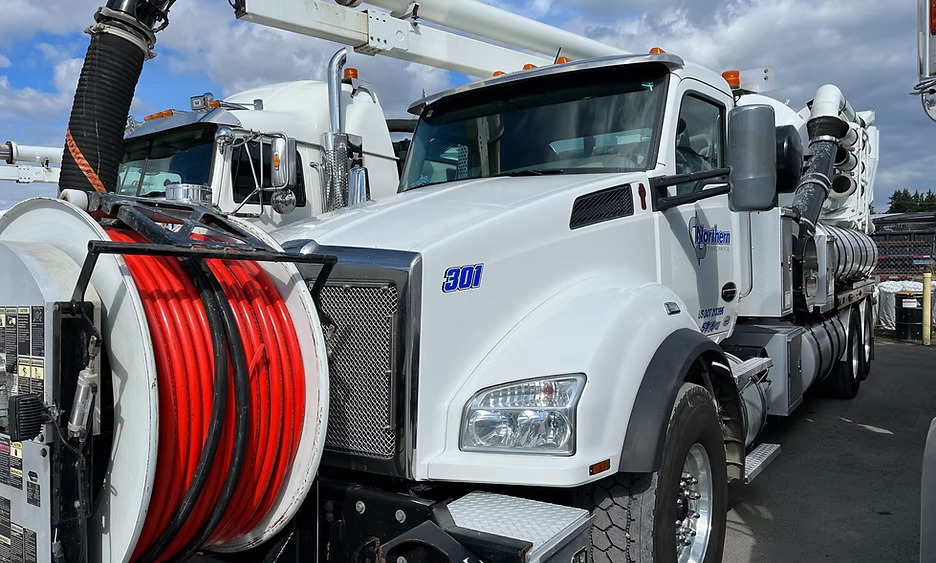
Tacoma, Wash.-based Northern Environmental operates a fleet of 21 Vactor trucks that provide construction companies, manufacturers, cities, garbage companies, Safeway and other businesses in Washington and Oregon with hydro-excavation, industrial cleanup, stormwater management, utility work and waste management services.
The Vactor trucks it operates are kind of like a giant vacuum cleaner on wheels and cost about $500,000.
There’s a growing need for the type of services that Northern Environmental provides. The company’s business is expanding so quickly that it expects to add two trucks per year over the next five years.
“I can’t buy trucks fast enough or hire people fast enough to support the growth that’s in front of us. It’s a good problem to have, but a problem that keeps me up at night,” says CEO and owner Dennis Miller.
The company, which does between $16.5 and $17 million worth of business per year, just purchased a site for its new headquarters and expects to double its revenue in the next five years.
Second chance hiring practices
Although Miller was never incarcerated, he was formerly a meth addict on the verge of suicide and says he has a good understanding of the workers the company hires who have been incarcerated.
Northern Environmental currently has about 40 employees and expects to hire at least 19 more over the next five years. Of their current employees, at least seven or eight of them have been in prison, mostly on drug-related charges.
Most employees find out about job openings by word-of-mouth. But Miller says he would like to begin working with an employment agency, because the business is growing so quickly that he can’t find enough workers through his contacts.
The hiring process includes a pre-screening drug test and then an interview. They don’t do background checks, except in the case of a few people who may be working on the company’s military contracts that require them.
The requirements for the entry level job are simple: the ability to lift 50 pounds and work a shovel. “They have to be physically fit. Pre-existing injuries could be a problem,” Miller says. “Even when they’re operating a truck, there’s a physical aspect to it. It’s not for everybody. A guy will be on the end of a pressure washer hose that is used to displace dirt for four, five, six hours straight. It’s physically taxing. We don’t discriminate on age, but it really is a young person’s job. It’s about physical ability and endurance.” And there are only two or three women in the entire state of Washington who do this type of work, he adds. None of them are employed at Northern Environmental.
New employees begin doing labor, which means they ride along on the trucks and help the driver do whatever needs to be done.
“We have better operators if we start people off as labor and pay for them to go to CDL school. That way, we can work with them from scratch,” says Miller. “They work at labor for a period from at least 90 days. That way they know what they’re getting into and we worked with them and know them a little better.” Some employees, however, remain in labor roles long term.
The company selects those who do show promise and sends them to a six-week CDL truck driving course. It pays their tuition of $9,000 and their salary while they attend.
After receiving their CDL license, the employees get on-the-job-training training to learn how to operate the Vactor trucks.
As Vactor truck operators, they start out making making about $120,000 per year, advancing to between $180,000 and $190,000 for experienced drivers. And Miller says he’s always looking for people and will hire 10 new operators in the next five years.
Although he’s had success with hiring people in reentry, it hasn’t come without challenges. The biggest of these is honesty. “It comes down to honesty, whether it’s a situation where they’re not being honest with themselves or not being honest with us,” Miller says. “One of the things I push is that as long as you’re transparent, as long as you own your mistakes, we can work together as a team.”
Despite these challenges, Miller describes the experience as largely positive.
“We end up with great employees, who are loyal and who think of the company first. They have a sense of investment in the business. People feel like they’re part of the culture and the fact that they’ve bought into it makes me smile,” he says. “Our general manager rates success in how many homes are bought and how many babies are born. When people are buying homes and starting families they’re successful.”
And for those thinking about starting a second chance hiring initiative, Miller has some advice.
“Hire well and don’t hold people’s past against them,” he says.